
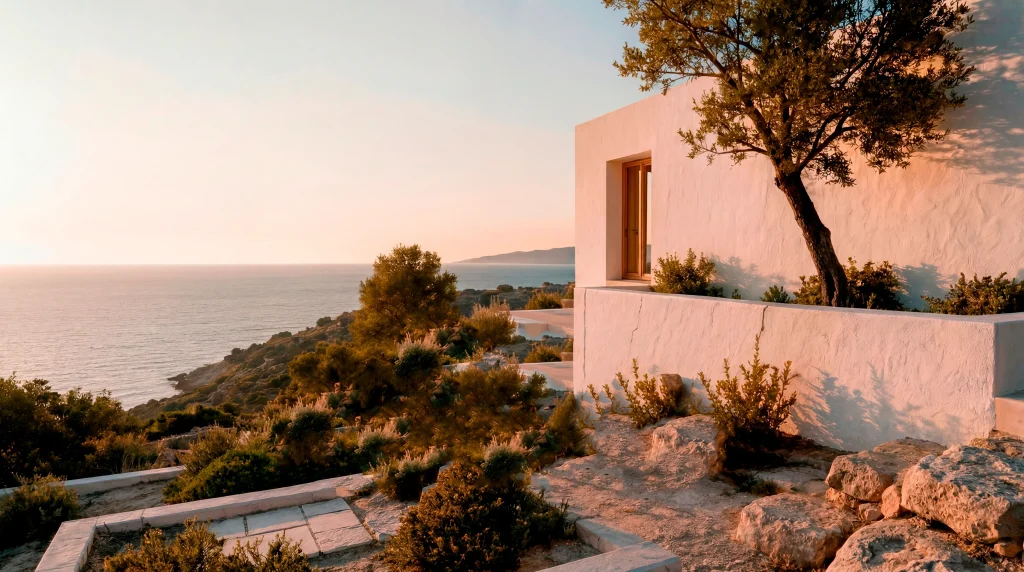
Mediterranean architecture is more than a style: it is a way of life. This architecture, inspired by the Mediterranean coastlines (from Greece, Italy, or the south of France to Valencia, Spain), seeks to achieve a balance between well-being, climate, and nature. Some of its defining characteristics include light-filled spaces, the use of natural materials, and a seamless connection between interior and exterior.
The Origins of Mediterranean Architecture
Mediterranean architecture was born from adaptation to the warm, sunny climate of coastal regions. For centuries, homes were designed to take advantage of natural ventilation, protect against heat, and create cool, comfortable environments without the need for technology.
Traditional Mediterranean houses share common features:
-
Whitewashed walls that reflect sunlight.
-
Interior courtyards and terraces.
-
Large windows and open spaces.
-
The use of stone, wood, and handcrafted ceramics.
-
Integration with the natural environment.
Today, this essence continues to evolve into a more sustainable, minimalist, and functional contemporary architecture.
Main Characteristics of Mediterranean Style
1. Light as protagonist
Every space is defined by natural light. Large windows, courtyards, and strategic orientations allow the creation of warm, open, and vibrant interiors.
Mediterranean architecture does not conceive light solely as a functional resource, but also as an essential element of the home’s emotional experience.
2. Natural and honest material
Wood, natural stone, fired clay, lime, and plant-based fibers are key components of Mediterranean identity. These materials provide authenticity, texture, and a direct connection to the natural environment.
Many of them not only have aesthetic value but also offer excellent thermal and sustainable properties.
3. Connection between interior and exterior
Mediterranean homes break down the barriers between the dwelling and its surroundings. Courtyards, porches, gardens, and terraces become natural extensions of the interior.
Cross ventilation and continuous contact with nature are encouraged by the architecture, which adapts to the rhythms of outdoor life.
4. Neutral colors and serene atmospheres
This style is characterized by the predominance of natural tones, warm whites, sand colors, and terracota hues. The goal is to create spaces that feel calm, timeless, and pleasant.
Visual simplicity allows light and materials to become the true protagonists.
Benefits of a Mediterranean Home
Natural well-being and comfort
Natural ventilation, daylight entry, and the use of organic materials create healthy and pleasant living spaces.
Energy efficiency
Mediterranean design reduces the need for artificial climate control thanks to traditional passive strategies adapted to contemporary architecture.
Timeless aesthetics
The combination of simplicity, nature, and craftsmanship ensures that this style remains relevant over time.
The Mediterranean Essence in Contemporary Architecture
Mediterranean architecture, more than an aesthetic trend, represents a deliberate way of inhabiting space. In contemporary architecture, designing with climate in mind, respecting the environment, and prioritizing well-being are principles that are becoming increasingly important.
The Mediterranean continues to be an inexhaustible source of inspiration in a world where we aspire to more human, sustainable, and light-filled homes.